Exactly How a Synthetic Roofing Contractor Evaluates Weather-Related Roofing System Risks
Weather does not harm every roofing system the same way. Two homes can sit on the exact same road, take the exact same storm, and come away with very various end results. That difference typically boils down to design, installment top quality, drainage, exposure, and material option. An experienced synthetic roofing contractor discovers to check out those variables quickly, since climate risk is rarely just about what happened last evening. It is additionally regarding what has actually been developing for years.
That is especially true with synthetic roof coverings. Homeowners often choose them for durability, look, and reduced upkeep compared to all-natural slate or cedar. Those are genuine advantages, however no roofing material is immune to negative presumptions. A high roofing system with exceptional blinking details and a well-installed synthetic system can take care of extreme weather condition much better than a premium item laid over bad outdoor decking or coupled with weak attic air flow. A roofing system is a system, not just a shingle.
In places with wide seasonal swings, that distinction matters even more. A synthetic professional roofer Chicagoland property owners count on has to think beyond one sort of tornado. In the same year, a roofing may encounter motoring rain, hail storm, rapid freeze-thaw cycles, ponding at low-slope transitions, ice damming at the eaves, and summer warmth that checks growth and ventilation. Examining weather-related roofing threats implies researching how the entire assembly carries out under duplicated anxiety, not just seeking noticeable missing pieces.
Why artificial roof covering alters the assessment mindset
Architectural artificial roof is often picked because it imitates slate, shake, or floor tile while decreasing dead lots on the structure. That lighter weight can be a significant benefit, particularly during an artificial roof substitute on an older home where architectural adjustments would certainly be costly. However lighter weight also changes just how wind, fastening patterns, and side outlining must be assessed.
A contractor evaluating natural slate tries to find broken rock, slid pieces, failing copper, and load-related sagging. A service provider examining artificial roof covering roof shingles looks at those same important transitions, however likewise pays attention to exactly how the material flexes, just how it was attached, whether it has actually started to crinkle or lift at the leading edge, and how repetitive thermal movement may be impacting infiltrations and flashings.
Premium artificial roofing items have a tendency to carry out well when mounted to specification, but the phrase "to specification" brings a great deal of weight. Supplier details for starter training courses, ridge air vent combination, valley treatment, fastener placement, and underlayment compatibility are not fine print. They are the difference between a roof that disregards a hard climate season and one that begins dripping in subtle, expensive ways.
The very first point a knowledgeable specialist researches is exposure
Before climbing a ladder, a great examiner spends a few minutes on the ground. Direct exposure narrates. A home on an open great deal without any tree cover will certainly take a lot more direct wind and UV direct exposure than a home sheltered by neighboring structures. A home at the end of a long fetch, such as the side of a neighborhood backing to open meadow, commonly sees greater gust pressure at edges and ridges. In the Chicago area, that matters. Wind does not require to reach headline-grabbing speeds to examine a roofing system's weakest details.
Orientation matters also. South- and west-facing inclines typically mature faster since they take extra straight sunlight and harsher mid-day warm. North-facing slopes might hold moisture longer, which can encourage algae growth, freeze-thaw anxiety, and consistent dampness around debris pockets. When an artificial roofing firm examines risk, those slope-by-slope differences aid anticipate where failure is probably to appear first.
The roofline additionally shapes direct exposure. Dormers, converging gables, dead valleys, long rakes, and multi-level changes all develop disturbance and water drainage concentration. Synthetic roof covering for high-end homes typically entails intricate geometry, and intricacy increases both visual value and weather threat. The more detailed the style, the more crucial the details become.
Hail is seldom a basic yes-or-no diagnosis
Homeowners typically inquire about hail storm initially, especially after a storm. Understandably so. Hailstorm damages audios uncomplicated, yet it usually is not. On artificial roofs, impact feedback depends upon the item formulation, the size and thickness of the hail, roofing incline, ambient temperature level, and whether the roofing system already had hidden vulnerabilities.
Some effects leave noticeable aesthetic marks, such as scuffs, smashed sides, slits, or broken tabs. Others produce much less remarkable indications, like slight synthetic roofing contractor deformation around fasteners, anxiety whitening, or wounding that appears only when checked out at an angle or dealt with very carefully by a knowledgeable artificial roofing contractor. The obstacle is dividing cosmetic wear from functional damage.
That judgment phone call matters due to the fact that replacement decisions lug real price. A contractor with honesty does not call every imperfection tornado damage, and a cautious house owner ought to be wary of anybody who does. On the various other hand, refined effect damage around hips, ridges, and revealed field areas can jeopardize water shedding long prior to a leak shows up inside. I have seen roofing systems that looked appropriate from the driveway, yet revealed duplicated micro-fracturing in high-exposure areas when checked up close. Those roofings usually fall short during the next significant tornado, not the one that initially damaged them.
In synthetic roof covering Chicago tasks, hail storm assessment frequently overlaps with age and installation background. A more recent roof covering with audio decking and proper underlayment may endure moderate hail quite possibly. An older roofing system, particularly one with minimal fastening or breakable device components, can suffer out of proportion damage from the exact same event.
Wind damage starts at the sides and relocations inward
Wind does not strike a roofing system evenly. It services edges, eaves, ridges, and rake sides initially. Negative stress lifts where resistance is weakest, after that repeated gusting broadens that weak point. On synthetic roof setup tasks, side securement and starter alignment are several of the most essential consider lasting tornado resilience.
During evaluation, a specialist searches for tiny ideas: a somewhat increased leading side, sealer failing where it ought to be bonded, fasteners positioned expensive, ridge caps with minor variation, or revealed underlayment at prone changes. These are the kinds of issues home owners nearly never ever notice from the ground, yet they are exactly what develop into blown-off sections throughout the next wind event.
This is one factor artificial roofing system installers that comprehend regional climate patterns have a tendency to outperform crews that just understand exactly how to make a roofing system appearance ended up. In Chicagoland, wind-driven rain is often as crucial as wind uplift. If a detail permits capillary access or backflow under stress, the roofing system can leak even without losing noticeable pieces.
A specialist also looks at what is taking place around the roofing. Loosened rain gutters, displaced fascia cover, curved drip side, and movement at smokeshaft flashing can all indicate that wind has actually currently begun to exploit weak points. Roofing danger is hardly ever separated to the area product alone.
Freeze-thaw damage is one of one of the most underrated threats
Homeowners frequently picture weather damages as significant and sudden. In truth, several roofing failures are slow. Freeze-thaw cycles are an ideal instance. Water enters a tiny void, sits, ices up, expands, defrosts, then repeats the procedure dozens of times through a winter season. Each cycle broadens the opening, loosens bolts, or stresses nearby components.
Synthetic roof generally handle moisture better than several conventional materials, yet they are still vulnerable where water remains. Valleys, sidewall transitions, roof-to-wall intersections, skylight visuals, plumbing vents, and smokeshaft saddles are common difficulty areas. If particles slows down drain or blinking was not integrated easily at installment, winter months will discover the mistake.
In synthetic roof covering Naperville IL evaluations, ice dam risk is a routine topic due to the fact that the area sees adequate snow and sufficient temperature level fluctuation to make side defense crucial. A service provider does not just search for the existence of ice shield. The assessment goes even more. Exactly how much up the incline does it run? Was it installed continually at susceptible changes? Is attic room warmth loss contributing to melt-and-refreeze patterns? Are consumption and exhaust air flow balanced? Those questions matter since ice dams are not triggered by roofing material alone.
I when checked out a premium house with costs artificial roof that had established discoloring along 2 upstairs room wall surfaces. The tiles themselves were still healthy. The actual problem was a combination of insufficient attic room air sealing, uneven insulation, and a valley detail that caught slushy snow longer than it need to have. The visible signs and symptom showed up inside your home, however the origin was a system dispute between heat movement, dampness, and drainage.
Drainage tells you more than the shingle surface
A roof can have appealing artificial roof roof shingles and still be high risk if drainage is poor. Water holds your horses. It does not need a remarkable opening. It just requires rep and time.
That is why a seasoned synthetic roof firm invests severe interest on water courses. Valleys must relocate water cleanly without capturing leaves or overconcentrating runoff versus fragile shifts. Cricket construction behind chimneys ought to stop standing water and drifting snow buildup. Rain gutters should have adequate ability and proper pitch. Downspouts need to discharge properly so wintertime backup does not create ice at the roof covering edge.
Drainage troubles usually show up first as discoloration, granule-like debris from surrounding materials, mildew near soffits, or duplicated overflow marks on siding. On multi-level roofing system designs, top areas can discard remarkable water volume onto lower ornamental areas. This is common in artificial roof for luxury homes where visual roof covering intricacy can inadvertently create concentrated wear areas. A service provider assessing climate risk has to think hydraulically, not simply cosmetically.
Attic problems typically confirm what the exterior suggests
Exterior inspection can recognize likely failure factors, yet attic conditions frequently verify the diagnosis. A service provider examining weather-related roofing system risks will look for darkened sheathing, rusted nail tips, mold-like growth, compressed insulation near eaves, frost residue, or indications of repeating wetness around infiltrations. These indications aid divide a single occasion from a chronic issue.
Poor ventilation continues to be among the greatest covert liabilities in property artificial roof. Inadequate intake roofing cintractor can starve ridge exhaust. Excessive exhaust without balanced consumption can pull conditioned air from the living space. In either case, the roof covering deck experiences temperature level and dampness swings that raise winter condensation and increase summertime warm stress.
This is where experience matters. Home owners typically assume that if a roof does not leak, it is fine. Yet roof coverings can age from the within out. An artificial roofing system replacement may become essential not due to the fact that the area product stopped working early, but due to the fact that entraped heat and wetness degraded the substratum, underlayment, and fastener holding power over time.
Material compatibility is a real weather-risk factor
Not all artificial roof are identical. Product layout, accessory schedule, tested settings up, and approved underlayments vary. A professional evaluating risk requires to understand what specific product is on the roofing system and whether the original installation matched its requirements.
This sounds technological, yet it has practical repercussions. If an artificial shake account was set up with a generic ridge information instead of the manufacturer-recommended vented assembly, wind-driven rain performance may be decreased. If blinking steels were selected without taking into consideration neighborhood corrosion exposure or motion, thermal cycling can open joints. If bolts were also short for the deck condition, uplift resistance might never ever have actually been adequate.
Architectural synthetic roof covering commonly prospers due to the fact that it combines aesthetic allure with design benefits. But crafted systems just work when their components are treated as interdependent. That is one factor a certified artificial professional roofer will certainly commonly ask even more inquiries than a general roofer. The objective is not to complicate the task. The goal is to stay clear of positive guesses.
Age issues, but age alone is a poor predictor
Homeowners typically ask how many years an artificial roofing "should" last. It is a reasonable inquiry, but climate risk does not follow a cool schedule. I have actually seen fairly young roof coverings with preventable installation imperfections age badly in under a decade, and older roof coverings remain functional due to the fact that they were mounted carefully, aerated correctly, and preserved consistently.
A far better way to think about age is as one variable amongst several. The more useful concerns are these: How many significant weather occasions has the roofing system experienced? Has it seen repeated freeze-thaw tension? Was upkeep done promptly after small damages? Are susceptible transitions original, patched, or previously changed? Has nearby tree development transformed color and particles patterns over time?
When artificial roof covering installers assess replacement versus repair work, they weigh current problem, projected weather direct exposure, and price effectiveness. A localized repair service can be the appropriate answer if the roof is basically sound. Yet if numerous information are coming close to failure at once, an artificial roofing substitute may be extra prudent than going after leaks section by section.
Regional judgment issues in Chicagoland
There is a factor local experience turns up so usually in specialist selection. Artificial roofing Chicago and suv markets provide a distinct mix of environment stress, code expectations, architectural range, and property owner top priorities. A contractor working frequently in Naperville, the western suburbs, and the city will certainly discover patterns that an out-of-area staff may miss.
For instance, older homes may have layered modifications, concealed deck repair work, or ventilation compromises from earlier improvements. Newer personalized homes might use complex rooflines and premium materials but still struggle with drainage concentration if aesthetics were prioritized over runoff monitoring. Lake-influenced wind patterns, heavy damp snow events, springtime hailstorm, and abrupt temperature swings all influence inspection judgment.
That regional pattern acknowledgment is one reason numerous homeowners look especially for a synthetic roofer Chicagoland based rather than simply searching for a broad nationwide supplier. Environment experience is not marketing language. It changes genuine decisions regarding underlayments, blinking approaches, air flow strategies, and fixing urgency.
What a responsible danger examination sounds like
A reliable service provider seldom chats in absolutes. Rather, the conversation typically appears gauged. This incline is extra susceptible than that one. These ridge details must be kept an eye on after the following winter. The hail marks here show up cosmetic, yet this valley blinking is a much more immediate concern. The roof might have five great years left if drainage is remedied, or a lot less if the attic room moisture concern continues to be unresolved.
That type of nuanced answer can feel much less enjoyable than a fast verdict, yet it is more useful. Roofs stop working via mixes of anxiety. Weather condition reveals weak points, yet a lot of those weak points were created long before the tornado arrived.
A mindful synthetic roofing company records conditions thoroughly, clarifies what is currently harmed, what is most likely to end up being a trouble, and what can sensibly wait. The most effective recommendations are prioritized, not blown up. House owners do not require alarm system. They need clarity.
The value of proactive inspections
One of one of the most practical lessons in roof is that little flaws are most inexpensive when they are still boring. A raised edge, a small flashing separation, clogged water drainage, or early attic room condensation might not feel immediate. After one bad period, each can end up being expensive.
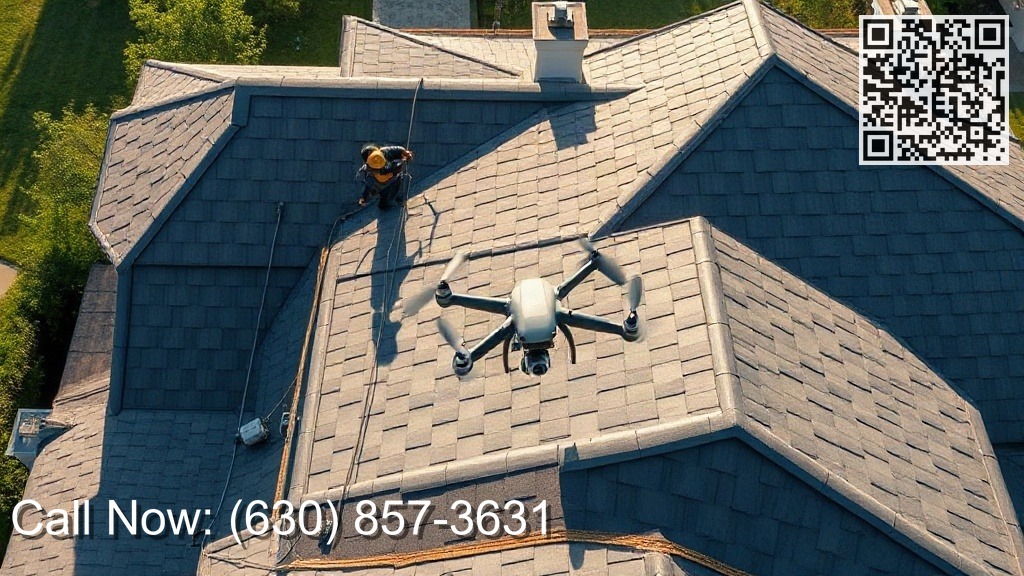
For homes with artificial roofings, especially custom-made or high-value buildings, routine inspection becomes part of protecting the investment. That does not imply continuous intervention. It suggests having an experienced synthetic professional roofer evaluate the roofing system after major hailstorm or wind events, and additionally at reasonable periods as the roof ages.
Residential synthetic roofing is a strong option for house owners that want efficiency and look without the weight and upkeep needs of some standard products. However the material alone is not the story. Weather-related roofing threat is shaped by exposure, design, installment high quality, ventilation, water drainage, and maintenance action. A contractor that recognizes those links can frequently detect tomorrow's issue while it is still convenient today.
That is the actual worth of a professional assessment. It is not just about determining damage. It has to do with recognizing just how weather condition will certainly communicate with this specific roofing system, on this certain residence, in this details environment, and making audio decisions prior to the next storm examinations every assumption.
When Quality Matters
Salvo Architectural Roofing Contractors
566 West 5th Ave Naperville, IL 60563
(630) 857-3631
 Ask ChatGPT
 Ask Grok
 Ask Perplexity
 Ask Claude
 Ask Google AI
 Ask You